The Amazon Credit Card in Italy offers up to 2-3% cashback on Amazon.it purchases. A standard Italian credit card from Nexi or UniCredit caps that same category at 0.5-2%. The gap looks obvious. So obvious that it hides the more interesting question.
That cashback rate only kicks in on Amazon.it spending. Every euro spent at a supermarket, a gas station, or a restaurant earns the same return as any generic card. And for a shopper who splits purchases across multiple retailers, the math changes fast.
This article is for the Italian resident who buys on Amazon regularly, maybe €200-400 a month, and wants to know if the dedicated card earns enough to justify carrying it alongside a general-purpose option.
The Cashback Math That Decides Everything
Most Amazon card discussions in Italy start and stop at the cashback percentage. I’d argue that’s the least useful place to focus, because the annual fee structure paired with those rates tells a completely different story.
A card paying 3% cashback on €300/month of Amazon spending returns about €108 per year. That sounds decent.
But if the annual fee runs €20-40, and a competing card from Nexi or UniCredit pays 1.5% on all spending categories with zero annual fee, the break-even math shifts depending on total monthly spending outside Amazon.
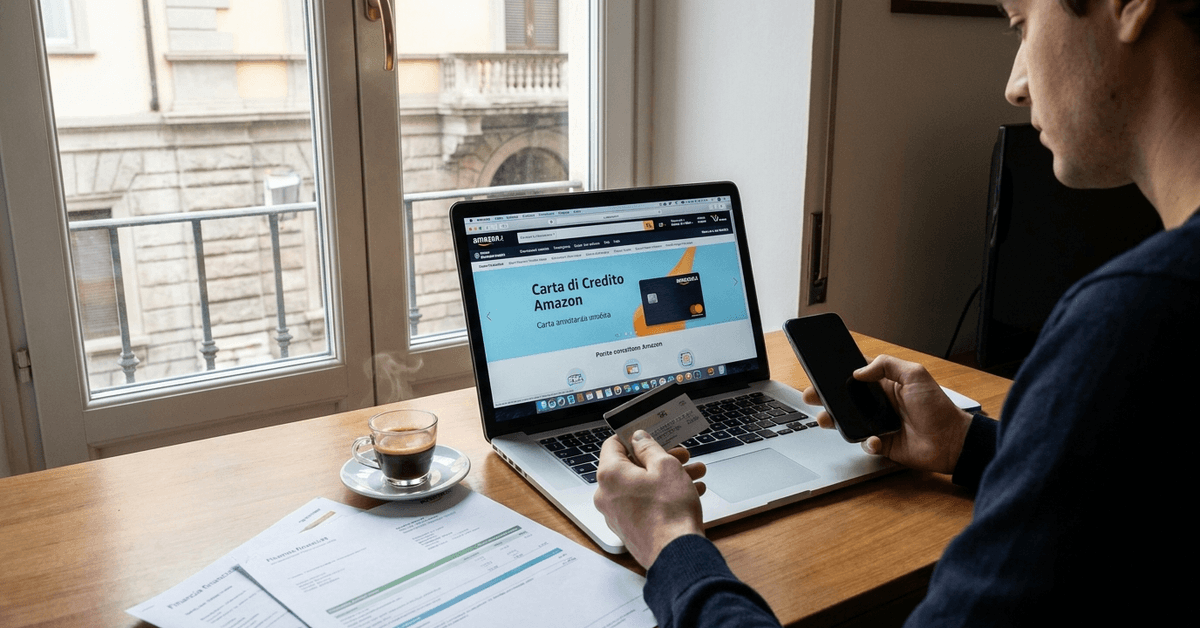
Someone spending €1,500/month total but only €300 on Amazon might earn more raw cashback from a flat-rate card applied to all purchases. The Amazon card wins big only when Amazon.it spending represents a large portion of total monthly card use.
How Amazon Partners Split the Card Experience
Amazon doesn’t issue the card directly. It partners with Italian financial institutions like Intesa Sanpaolo or Deutsche Bank.
The bank handles the credit assessment, sets interest rates, manages billing, and controls the approval decision. Amazon contributes the rewards structure and branding.
This split matters because two applicants with identical Amazon accounts can receive different terms depending on which bank partner processes their application. Interest rates, credit limits, and even the approval timeline depend entirely on the issuing bank’s internal criteria.
Interest Rates and Late Fees: the Numbers That Eat Cashback
If a balance carries over to the next month, interest charges on Italian credit cards can run significantly higher than the cashback earned. A single month of unpaid balance on a €500 purchase can erase several months of accumulated rewards.
Late payment penalties also hit credit scores through Italy’s CRIF (Centrale Rischi di Intermediazione Finanziaria) system. One missed payment recorded there can affect future loan and mortgage applications for years.
Applying for an Amazon Credit Card in Italy
The application starts on Amazon.it and moves through several stages. The process is mostly digital, but the bank review phase introduces variables that no amount of online form-filling can predict.
Documents and Details to Have Ready
The digital form asks for standard personal information: name, address, occupation, and codice fiscale. Banks then require scanned copies of identity documents and proof of income. A few things trip up applicants regularly:
- Blurry document scans get rejected and restart the review clock
- Address mismatches between Amazon account and bank records trigger manual review
- Missing proof of income (busta paga or tax declaration) stalls the application entirely
- Recently changed employment status can flag the file for additional scrutiny
Having every document prepared before starting the application avoids the most common delays.
The Bank Review Phase Nobody Controls
Once submitted, the issuing bank runs its own credit assessment. Some applicants hear back within hours. Others wait days. The timeline depends on the bank’s internal processing load and the complexity of the applicant’s credit profile.
I think the biggest mistake applicants make with Intesa Sanpaolo or Deutsche Bank is assuming that a clean Amazon purchase history matters during this phase. It doesn’t.
The bank evaluates financial risk through standard lending criteria: income stability, existing debt, credit history through CRIF, and residential stability. A ten-year Amazon Prime member with irregular income can be rejected while a new customer with a stable government salary sails through.
Card Delivery and Activation Steps
Approved applicants receive the physical card by mail. Activation requires either a phone call or an online process through the bank’s portal. A first purchase or PIN activation step is sometimes required before cashback and financing features become active.
Who the Amazon Card Suits (and Who Should Skip It)
The ideal cardholder spends a large portion of their monthly budget on Amazon.it, pays the full statement balance every month, and doesn’t mind managing a card relationship split between Amazon and a banking partner.
The card may be a poor fit for anyone in these situations:
- Monthly Amazon spending under €150 (cashback barely offsets potential annual fees)
- Tendency to carry balances month-to-month (interest charges wipe out rewards)
- Need for broad cashback across groceries, dining, and transportation
- Recent job changes or address moves (increases rejection risk)
Amazon Card vs. Standard Italian Credit Cards:
| Feature | Amazon Credit Card | Standard Italian Card |
|---|---|---|
| Amazon.it Cashback | Up to 2-3% | 0.5-2% |
| Annual Fee | Low to medium | Medium to high |
| Partner Offers | Amazon-specific | Broader retail coverage |
| Digital Management | Amazon app + bank portal | Bank portal only |
| Welcome Bonus | Common | Less common |
The Amazon card wins on Amazon-specific returns. A standard card from Nexi or a major bank often wins on everyday spending and single-portal management.
Credit Score Blind Spots for Italian Applicants
A surprising number of Italian applicants don’t check their CRIF report before applying for any credit card. This report is the Italian equivalent of a credit score file, and banks use it as a primary decision tool.
An old unpaid utility bill, a forgotten phone contract, or a missed installment payment from years ago can sit in this report without the applicant knowing.
Checking before applying costs little and prevents a wasted hard inquiry on the record. Banca d’Italia’s consumer rights page lists specific rights around credit reporting access.
I would recommend that anyone considering the Amazon card request their CRIF report at least two weeks before applying. A hard credit inquiry from a rejected application stays on file, and stacking multiple rejections in a short period sends a negative signal to every future lender.
Getting More from Rewards and Promotions
Amazon occasionally runs welcome bonus promotions tied to the card: discounts on first purchases, bonus cashback during launch periods, or extra points during Prime Day. These promotions rotate and aren’t always available.
A few habits make the rewards structure work harder:
- Pay the full balance every month to avoid interest charges that exceed cashback
- Track reward point expiration dates through the Amazon app
- Time large Amazon purchases around promotional bonus periods
- Compare promotional offers against standalone Amazon coupon deals
Stacking a welcome bonus on top of a Prime Day sale can produce meaningful one-time savings. But those windows are narrow and unpredictable, so building a card strategy around them is risky.
Questions People Ask About the Amazon Credit Card Italy
These are the questions that come up most often when Italian shoppers look into this card.
- Q: Can I link the Amazon credit card to Apple Pay or Google Pay?
Linking depends on the issuing bank partner, not on Amazon. Some bank partners support mobile wallet integration and others don’t. Check the specific bank’s digital payment compatibility before assuming the feature is included. - Q: Does the Amazon credit card help build credit history in Italy?
Responsible use does get reported to CRIF, so consistent on-time payments build a positive record over time. But the card alone won’t fix an existing negative mark. Clearing old issues first produces better results. - Q: Is there a minimum income to qualify?
Each partner bank sets its own income threshold, and these numbers aren’t always published. Applicants with stable employment and regular documented income tend to have higher approval rates than freelancers or contract workers, even at similar income levels. - Q: What happens if Amazon changes bank partners in Italy?
Card terms, rewards, and management portals can shift when partnerships change. Existing cardholders typically get notified and transition to new terms, but promotional rates or bonus structures may not carry over. - Q: Can I use the Amazon credit card outside of Italy?
The card functions as a standard Visa or Mastercard abroad depending on the issuing network. Foreign transaction fees depend on the bank partner’s terms, not Amazon’s policies. Check fee schedules before traveling.
Conclusion
The Amazon credit card in Italy earns its place only when Amazon.it spending dominates monthly purchases. Carrying a balance even once can erase months of accumulated cashback rewards in interest charges.
Checking a CRIF report before applying prevents wasted inquiries and surprise rejections. The smartest move might be pairing this card with a flat-rate option for everything else.