Lidl Italy’s career portal has a pre-screening questionnaire that filters candidates before any human reads a single CV. That step alone disqualifies more applicants than a weak résumé ever could.
Most job seekers treat the online application like a digital dropbox: upload a PDF, click submit, wait. Lidl’s process has five distinct stages, and the order you prepare for them changes your odds at each gate.
This guide is built for job seekers in Italy targeting retail, logistics, or entry-level corporate roles at Lidl. If you are a recent graduate or a career switcher trying to crack into structured retail hiring, the specifics below should save real time.
Lidl Italy’s Hiring Portal Is a Funnel, Not a Form
The Lidl Italy careers page sorts every open position by location, department, and contract type. That much feels standard. But the portal is built as a multi-stage funnel: account creation, application submission, pre-screening questions, online assessments, and then (if you make it) a video interview round.
Each stage gates the next. Skipping preparation for step three because step one felt easy is where most applicants lose momentum.
Registration Details That Trip People Up
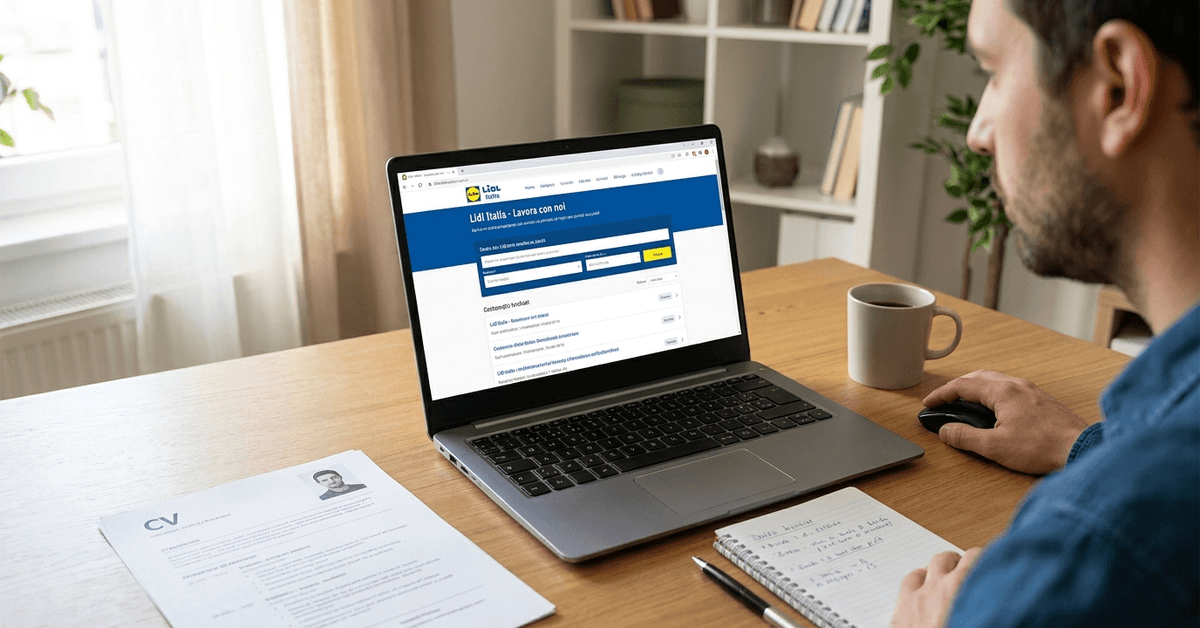
Creating a candidate account requires a valid email address, full legal name, home address, date of birth, and a résumé file in PDF format. The system sends an activation link after registration, and that email has a habit of landing in spam folders.
A small thing, but candidates who don’t activate their accounts within the first day sometimes find the link expired. Checking spam and confirming activation immediately keeps the process moving.
Searching for Positions: Filters That Matter
Once the account is live, Lidl’s search lets you filter by geographic area (Milan, Rome, Naples, and smaller cities), department (retail, logistics, administration), and contract type (full-time, part-time, internships).
I’d recommend starting with location first, since Lidl’s store density varies sharply across Italian regions. Northern Italy typically lists more openings than the south.
The Application Itself: What Goes Into Each Section
Lidl’s application form breaks into four parts: contact details, education history, work experience, and a skills section. A cover letter field exists but is optional. And this is where I’d disagree with the standard job-search advice.
Why I Think Cover Letters Waste Time on Lidl Applications
The common wisdom says to personalize a cover letter for every application.
I think that advice costs more hours than it returns on Lidl’s portal, because the system routes applications through automated pre-screening questions and situational assessments before a recruiter reads anything. A cover letter addressed to a hiring manager sits behind two algorithmic gates.
Time spent crafting a tailored letter would be better spent rehearsing answers to Lidl’s situational judgment scenarios and preparing for the problem-solving questions. Those automated stages carry more weight in deciding who moves forward.
Uploading Documents the Right Way
The portal accepts a few document types during submission:
- Résumé or CV in PDF format (Word files sometimes lose formatting in the system)
- Cover letter, if you choose to include one, tailored to the specific role
- Supporting certificates for language proficiency, IT skills, or other relevant qualifications
Keep file names clean and professional. “CV_Marco_Rossi_2026.pdf” reads better to a recruiter than “document(3).pdf” when it finally reaches human eyes.
Pre-Screening Questions: The Real Filter
After submitting documents, Lidl presents a set of questions about availability, willingness to relocate, and past experience. Some feel routine. Others ask for brief written examples of problem-solving or teamwork, and these carry weight.
The mistake most applicants make is treating pre-screening answers like checkbox formalities. Lidl’s system uses these responses to rank candidates before the assessment stage.
Direct, specific answers outperform vague ones every time. If a question asks about teamwork, name the situation, the action, and the outcome in two sentences.
Online Assessments and Video Interviews at Lidl Italy
Reaching the assessment stage is itself a signal. Not every applicant gets invited, so receiving the link means the pre-screening went well.
Lidl’s assessments test three areas, and knowing them in advance removes most of the surprise:
- Logical reasoning problems that measure pattern recognition and numerical thinking
- Situational judgment scenarios presenting workplace dilemmas with multiple response options
- Language proficiency checks, primarily in Italian with some English depending on the role
Preparing for Lidl’s Video Interview Round
Candidates who pass the assessment receive a video interview invitation. The format is typically pre-recorded: Lidl presents questions on screen, and the candidate records answers within a time limit.
Testing camera and microphone quality sounds obvious, but audio issues are the most common technical failure in recorded interviews. A quiet room with natural light and a neutral background does more for first impressions than rehearsing generic answers about “passion for retail.”
I’d also suggest recording a practice answer on your phone first. Watching yourself speak on camera for even thirty seconds reveals habits (looking away, speaking too fast) that feel invisible until you see them.
After Submission: The Waiting Period Nobody Prepares For
Lidl sends updates through email and the candidate portal, but response timelines are unpredictable. Some applicants hear back within a few days. Others wait weeks. And sometimes, no response comes at all.
This is normal in retail hiring across Italy, and it doesn’t necessarily mean rejection. Lidl processes high volumes of applications, and roles fill at different speeds depending on store openings, seasonal demand, and regional staffing needs.
What Happens After a Successful Interview
If the video interview goes well, Lidl may request reference checks or a second-round assessment before extending a formal offer.
The portal outlines each remaining step, though occasional miscommunication between automated notifications and actual timelines happens.
Keeping your candidate profile updated during this period matters. If your availability or contact details change, updating them in the portal prevents delays.
Practical Tips That Change Results on Lidl Italy Applications
Small adjustments to how candidates approach each stage compound across the funnel. A few specifics worth applying:
- Match keywords from the job listing in your CV’s skills section. Lidl’s postings repeat terms like “teamwork,” “initiative,” and “customer focus” for a reason.
- Answer every pre-screening question completely. Skipping optional fields or writing one-word answers reduces ranking.
- Check Glassdoor and similar platforms for interview insights from former Lidl Italy candidates, though not all advice found there is current or accurate.
- Keep all personal details consistent across your CV, portal profile, and pre-screening answers. Mismatched dates or job titles raise flags.
Staying Safe During the Application Process
Lidl Italy collects personal data under GDPR regulations, and all communications come through official channels ending in “lidl.it.”
Any message requesting financial information or upfront payments is fraudulent. Lidl will never ask for bank details during hiring.
If an offer arrives through WhatsApp, a random Gmail address, or a social media DM, report it. Legitimate Lidl hiring communication comes through the candidate portal or official company email domains only.
Questions People Ask About Lidl Italy Jobs Online
These come up frequently among Italian job seekers applying through Lidl’s digital portal.
- Q: How long does the Lidl Italy application process take from start to finish?
The timeline varies, but most candidates report a span of two to six weeks between initial submission and a final decision. Seasonal hiring periods (especially before holidays) tend to move faster. - Q: Can I apply to multiple Lidl positions at the same time?
Yes. The candidate portal lets you submit applications to several roles simultaneously. Each application tracks separately, so a rejection for one position doesn’t affect another. - Q: Do I need to speak Italian fluently to work at Lidl Italy?
For store and logistics roles, strong Italian is expected since daily work involves customer interaction and team coordination. Corporate or regional roles may list English as an additional requirement. - Q: What should I wear for a Lidl video interview?
Business casual works well. The setting matters as much as clothing: a clean background, good lighting, and stable internet signal all contribute to a stronger recording. - Q: Does Lidl Italy offer part-time or internship positions?
Lidl lists part-time, full-time, and internship contracts on the portal. Availability varies by region and season, so checking the career page regularly catches new postings as they appear.
Conclusion
Lidl Italy’s online hiring process rewards preparation at each stage, not just a polished CV. The pre-screening questions and assessments carry more influence than most applicants expect.
Candidates who treat every portal step as its own mini-interview tend to move further. Check the Lidl Italy careers page directly for current openings in your region.